Cold outreach still works when it’s clear, brief, and painfully relevant. We focus on starting conversations, not pitching demos. Replies are the micro conversion that lead to meetings, pipeline, and revenue. Below we share practical principles, tested frameworks, copy examples, and infrastructure tips so your emails and LinkedIn messages actually get replies.
You can have world-class tooling, perfect targeting, and pristine infrastructure, but if your copy doesn’t hit the pain, you won’t get engagement. Copy is the difference between an inbox reply and a tombstone in spam. It’s also one of the hardest things to master, because small adjustments often produce big swings in results.
<script>(function(d,u,ac){var s=d.createElement('script');s.type='text/javascript';s.src='https://a.omappapi.com/app/js/api.min.js';s.async=true;s.dataset.user=u;s.dataset.campaign=ac;d.getElementsByTagName('head')[0].appendChild(s);})(document,372145,'tu1or50rqqejh816h1cm');</script>
 The four pillars of successful outreach
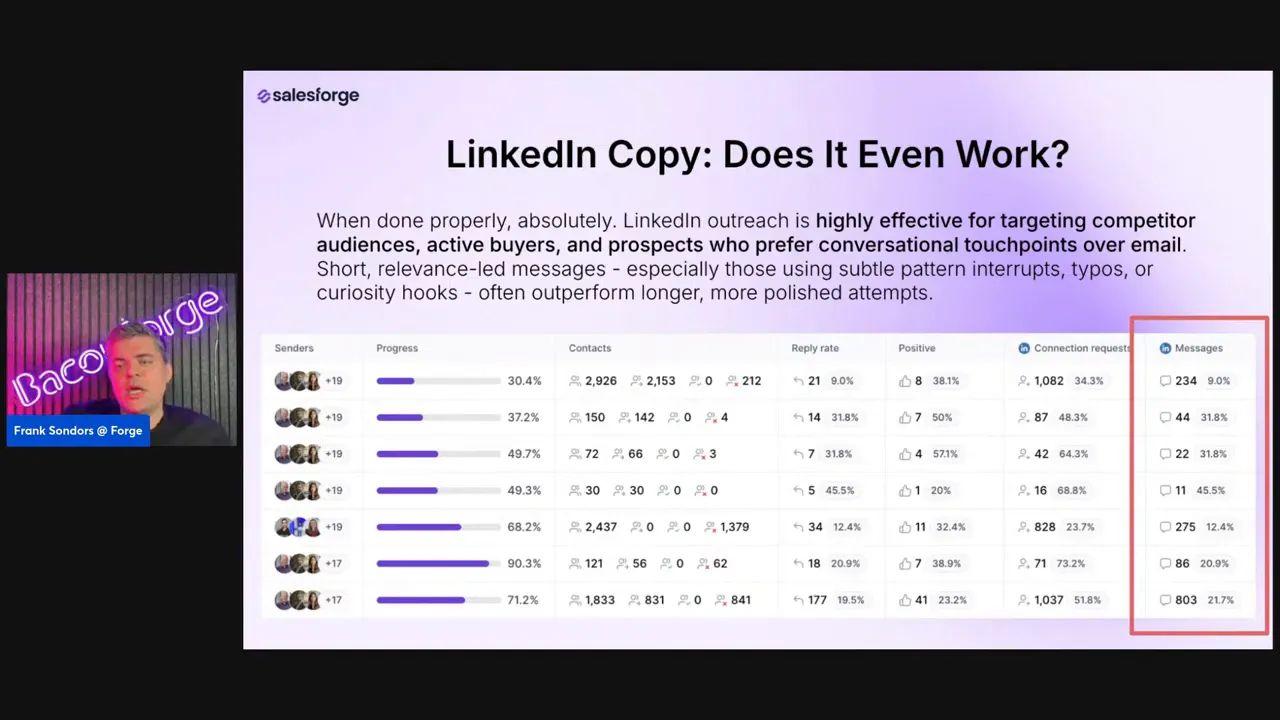
Treat LinkedIn like WhatsApp - short, conversational, no signature, and leading with a question. On email you have 50–60 words to explain the why; on LinkedIn you should ask a simple yes/no or a curiosity-sparking question. Use blank connection requests, then follow with a question-first DM. If LinkedIn messages look like emails, they feel automated and underperform.
 Frameworks to structure your cold copy
Frameworks are starting points. We use them to focus thinking, then tune language and variables for each persona.
Grab attention with a subject line targeted to a role or department ("quick idea for sales"), build interest by naming a specific outcome, show desire with short supporting evidence, then finish with a soft call to action.
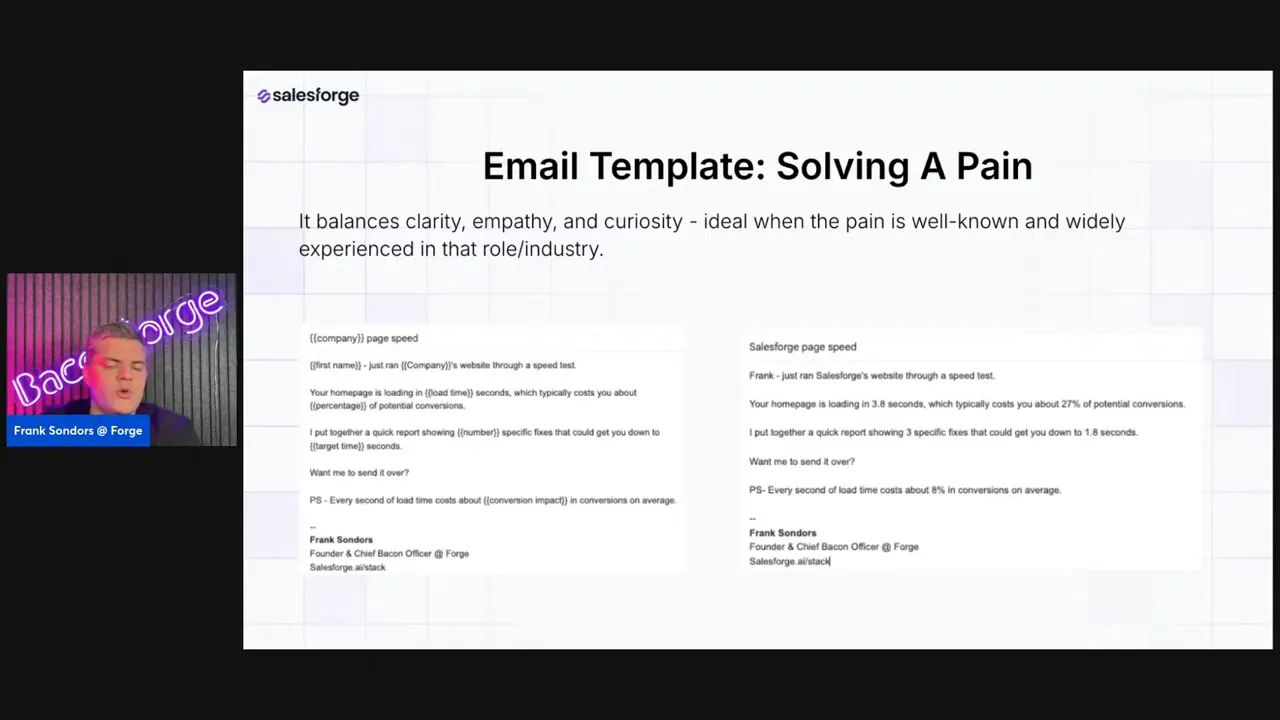
Lead with a specific pain (not enough pipeline; emails landing in spam), amplify the cost of that pain, hint at a solution, and ask a simple qualifying question. This works well when the pain is universal and urgent.
Paint a before and after scenario: what is the current struggle and what does success look like. Use this as a second-touch approach with a soft CTA like "Is this on your roadmap?" Reserve calendar asks for later in the sequence.
Use signals (funding, hiring, a new office) to praise the prospect, paint what success could look like, then push toward the next step. This is great for recently funded startups or companies showing growth signals.
For C-levels at 50+ employee companies use a bold short claim in the subject line and a single-line body. Examples: "I can generate $100k ARR in 3 months" or "Reduce your team by two SDRs." Keep it credibly bold and backed by case evidence in follow-ups.
Tailor messaging to title and priorities. The same product gets framed very differently for founders, VPs of Sales, and heads of Marketing. Segment and test.
Subject lines: email deliverability or emails landing in spam? Open with a direct question about the pain and offer to send a quick diagnostic report or a few fixes.
Offer a no-risk sample (for example, a complimentary on-brand product video for a Shopify SKU) to provoke an easy yes. When prospects can see the output, curiosity - and replies - increase.
Write a short, punchy email that reads like an ad. It’s unusual in an inbox and can earn 4–7% replies when executed well.
Small gimmicks still work: intentionally fake a merging error ("Hey FIRSTNAME - hope this landed") or add a light joke to break skimmers out of autopilot. Use sparingly and only where it fits the persona.
Name a competitor or integration in the subject line and ask if they’re exploring similar strategies. Example: "noticed Outreach launched X - are you exploring something similar?" This triggers curiosity and social proof if you share a quick result.
Present three specific observations about the prospect’s site or funnel (page speed, CTA placement, design issue), attach a quick impact estimate, and ask if they want the details. This reads human and data-driven.
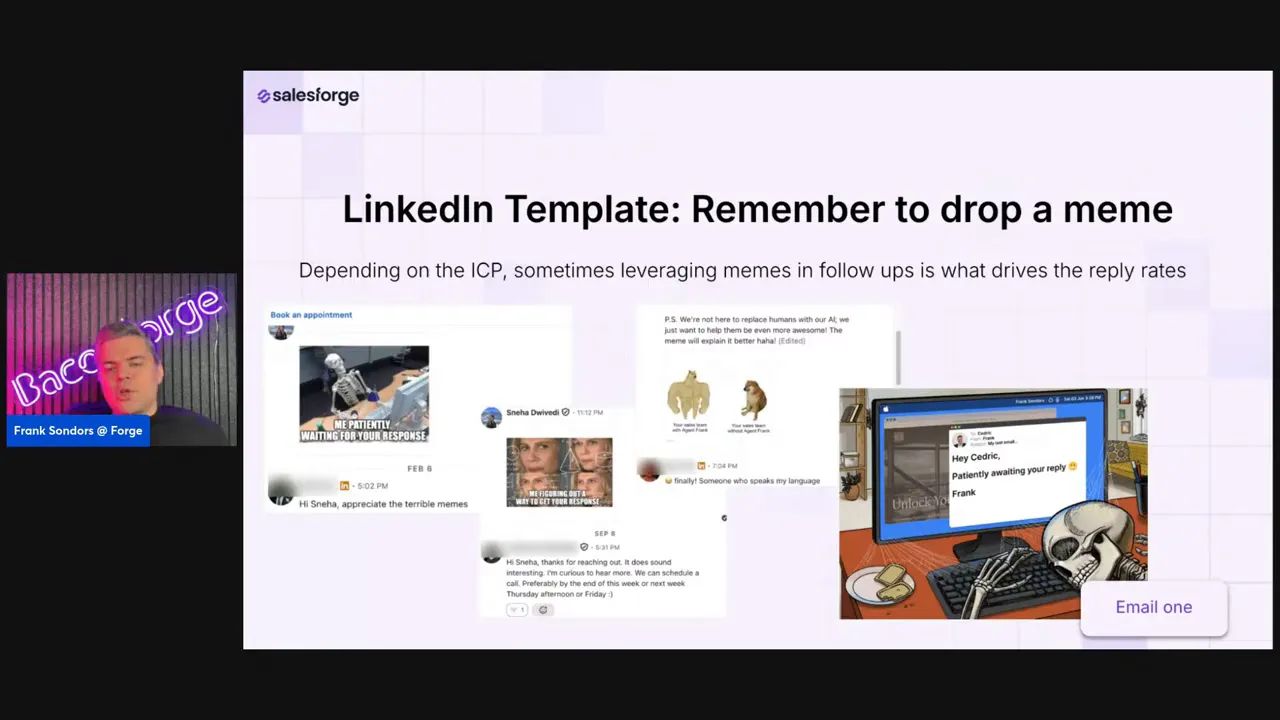
Follow-ups should always add something new: a different benefit, a short case study, a sample, or a visual. In later touches, test memes, GIFs, and short videos - anything that is not plain text - to increase response rates, especially in the follow-up sequence.
Deliverability and copy are partners. A great email that never lands is worthless. Keep these practical rules in mind:
If you want an integrated approach that combines infrastructure and AI personalization, use tools that orchestrate multi-channel sequences, warm up mailboxes, and consolidate replies across senders. Salesforge pairs multi-channel outreach (email and LinkedIn) with AI personalization, unlimited mailboxes and LinkedIn senders, warm-up tooling, ESP matching, and Primebox to manage replies across all channels. That structure helps keep deliverability high while letting us iterate on copy fast.
Follow-ups should continue until you get a clear answer, but each follow-up must add new value. Two to four thoughtful follow-ups are common; avoid bump-only follow-ups. Change the angle or offer with each touch.
Lowercase subject lines that name a pain or role perform well. Short, curiosity-driven lines like "email deliverability?" or "quick idea for sales" are strong opens. Test continuously because inbox patterns shift.
Yes - when appropriate for your ICP. Visual creative in follow-ups can dramatically increase replies, especially when text-only attempts have failed. Test and monitor for opt-outs and brand fit.
Faster replies convert better. Aim to respond within two hours to maximize conversion. For hot replies, sub-two-hour SLAs are ideal. Use AI reply engines or dedicated reps to meet this timeline.
A good rule of thumb is ~30 cold emails per warmed mailbox per day. In high-security verticals drop that to 5–10. Tailor limits to domain health and target industry.
No. Treat LinkedIn like a messaging app: short, conversational, and question-led. Open with a blank connection request then ask a single, direct question. Follow-up can be longer if the connection accepts.
Track replies, positive reply rate, bounce rate, and opt-outs. Avoid focusing on open rates; they are noisy and can mislead your optimization efforts.
Yes for non-English markets. Sending outreach in the prospect’s language can double or triple reply rates, though it may make live demos harder unless you have local-language capacity.
Effective cold outreach blends clarity, brevity, and relevance. Start with the pain, personalize at the contact level, test relentlessly, and route replies so you can move fast. When infrastructure and copy are aligned, outreach becomes predictable pipeline rather than guesswork.
.jpg)


.jpg)